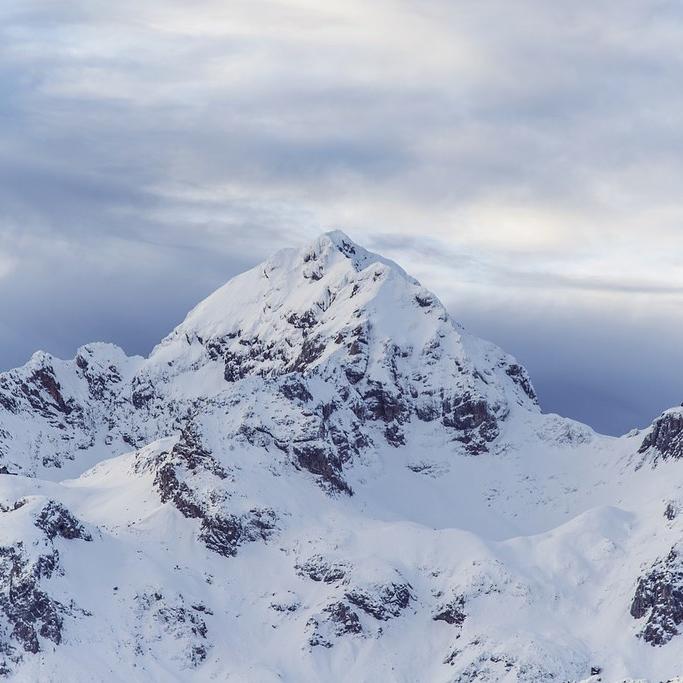
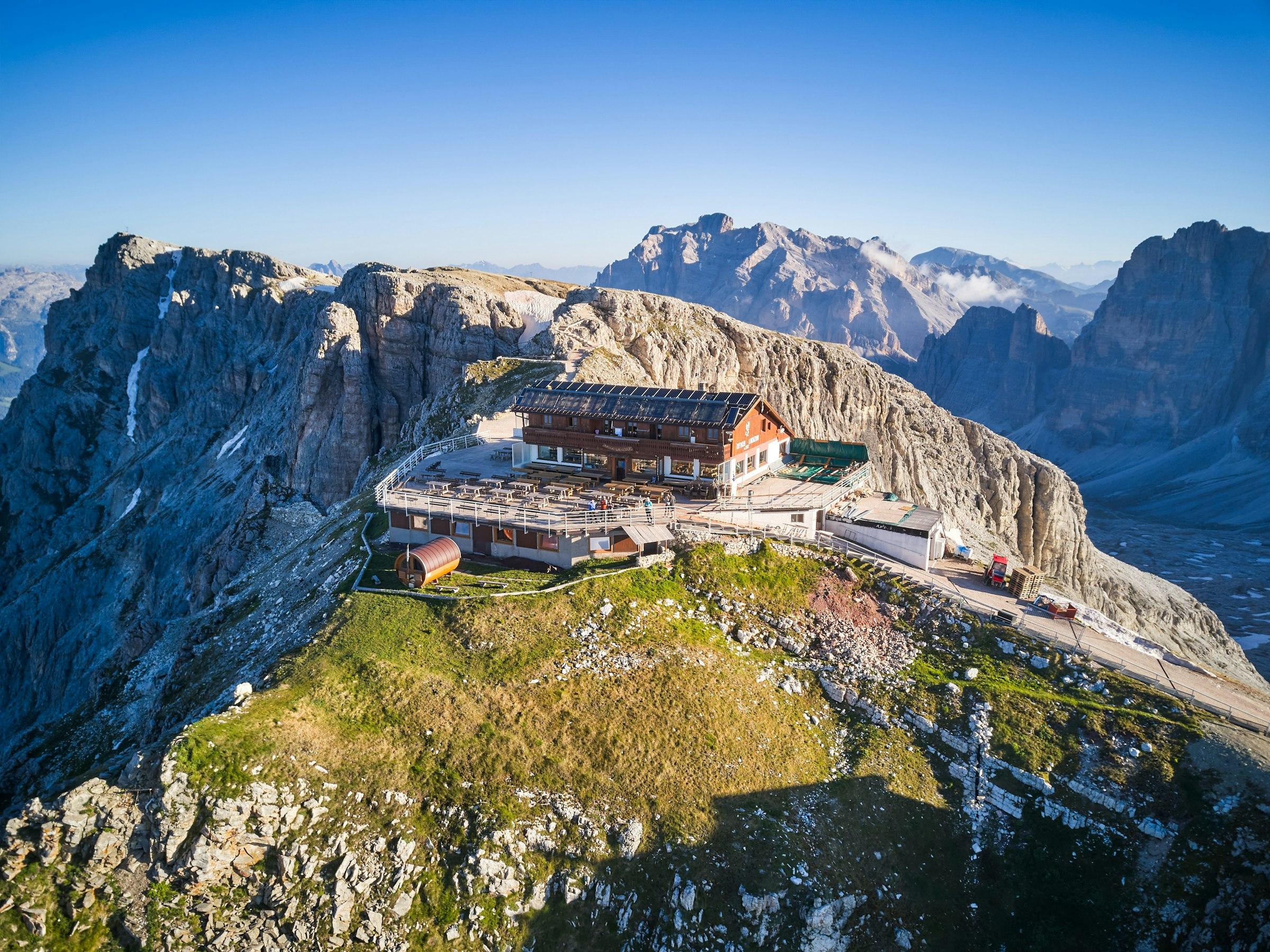
The classic hut-to-hut walk through the Dolomites: about 115 km from Lago di Braies south to Belluno, past the First World War tunnels of the Lagazuoi, the Cinque Torri, the Pelmo and the great north-west face of the Civetta, with a mountain hut, a bed and a hot dinner at the end of every day.
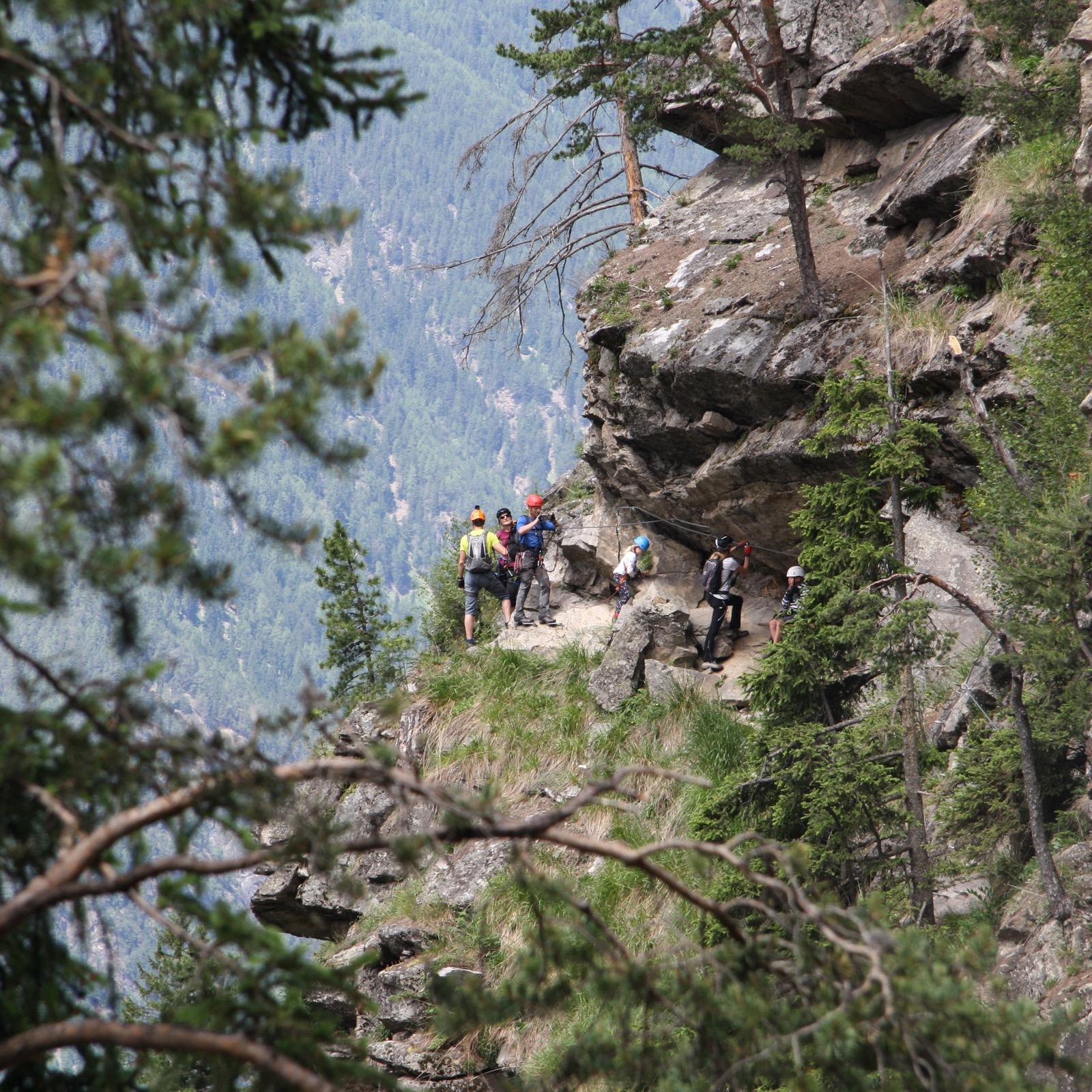
No climbing on the main route, but a real mountain walk: most days climb 500–1,100 m over steep scree, rocky steps and a few airy passages, one night is at 2,752 m on the Lagazuoi, and the last day drops 1,500 m. The via ferrata variants, above all the Schiara at the official finish, need gear and experience.
With a tent
Huts only
Plan on huts or guesthouses: a tent isn't realistic on this route. How →
When to go
Best: July–September. Possible: June–September.
Jan
Feb
Mar
Apr
May
Jun
Jul
Aug
Sep
Oct
Nov
Dec
BestPossibleNot in season
Most huts open in the second or third week of June and close in the second half of September. For 2027 Tissi has announced 9 June to 18 September, Biella 12 June to 25 September, Città di Fiume 13 June to 24 September and Nuvolau 20 June to 20 September, so the whole chain is open from about 20 June to 18 September. In June old snow can still lie on the highest passes, such as Forcella del Lago below the Lagazuoi and the Van de Città on day 9.
July and August are the surest months and the busiest, with the huts fullest in August. Thunderstorms build on many summer afternoons: start early and be off the high ground by early afternoon. September is quieter and often settled, but the days are shorter and the huts start closing after mid-month. Outside the season the huts are shut (CAI huts leave only a small, unstaffed winter room) and most summer buses stop.
There's no central booking: each hut takes its own bookings, most on their own websites, some by email or phone, and the day-by-day list below links them. For summer 2027 several were open when we checked: Città di Fiume from 3 November 2026, and Biella, Tissi, Vazzoler and Carestiato. Croda da Lago opens on 1 December 2026, Nuvolau and 7° Alpini in January 2027. July and August fill first: book the whole chain as soon as you know your dates, starting with the summit huts on days 3 and 4.
Most huts take a deposit when you book, usually €15–50 a person or up to half the price, and rarely refund it: Biella keeps 50%, Tissi €20 and Croda da Lago €15 a person. Half board is the norm; when we checked, it cost roughly €70–120 a person a night. CAI huts take at least 20% off half board for members of the CAI and partner alpine clubs who show their card.
The hardest beds to get: Lagazuoi, Nuvolau and around them
The summit huts on days 3 and 4 have the most demand: Nuvolau has 32 beds, and in November 2026 the Cinque Torri hut, below it, said summer 2027 was almost full. Nuvolau takes 2027 bookings only on its own website, from January 2027, with a 40% deposit. Lagazuoi books on its own site, which shows its free beds in a live calendar; it keeps a 50% deposit, never refunded, and gives no CAI discount.
If they're full, try Averau, half an hour below Nuvolau, or Scoiattoli. Instead of the Lagazuoi, the nearest choice is Scotoni, below the Lagazuoi lake, or ride the cable car down to Passo Falzarego and sleep in Cortina.
From 1 July to 15 September 2027 seats on bus 442 to the lake, and on the 439 from Monguelfo, must be booked and paid online in advance; when a bus is full there's no other bus in, and the usual travel passes and guest cards aren't valid. In 2026 the road into the valley was also closed to cars from 9:00 to 16:00 in that period unless you had booked a parking space, booking opened in early June, and a one-way ticket cost €7 online. The tourist office says the 2027 details will come in spring 2027.
Outside those dates you simply buy a ticket from the driver.
Easy dayModerate dayHard dayA sketch: straight lines between the nights’ stops. On the trail, follow the waymarks and a proper map.
1
Day 1 · Lago di Braies → Rifugio Biella
Moderate day≈ 4 h6 km↑940 m↓100 m
Sleep: Rifugio Biella, or Sennes and Fodara Vedla an hour or so on
Along the lake to its far end, then a steady climb up a stony valley under the Croda del Becco to Forcella Sora Forno (2,388 m). The Croda del Becco summit (2,810 m) is about 1¼ hours up from the hut.
Sleep: Rifugio Fanes or Rifugio Lavarella, a few minutes apart
Across the Sennes plateau and down a steep gully to Pederü (1,548 m), then up the Fanes valley on a track. In summer the Fanes hut runs a jeep from Pederü for its guests.
Sleep: Rifugio Lagazuoi (books on its own site), or Rifugio Scotoni
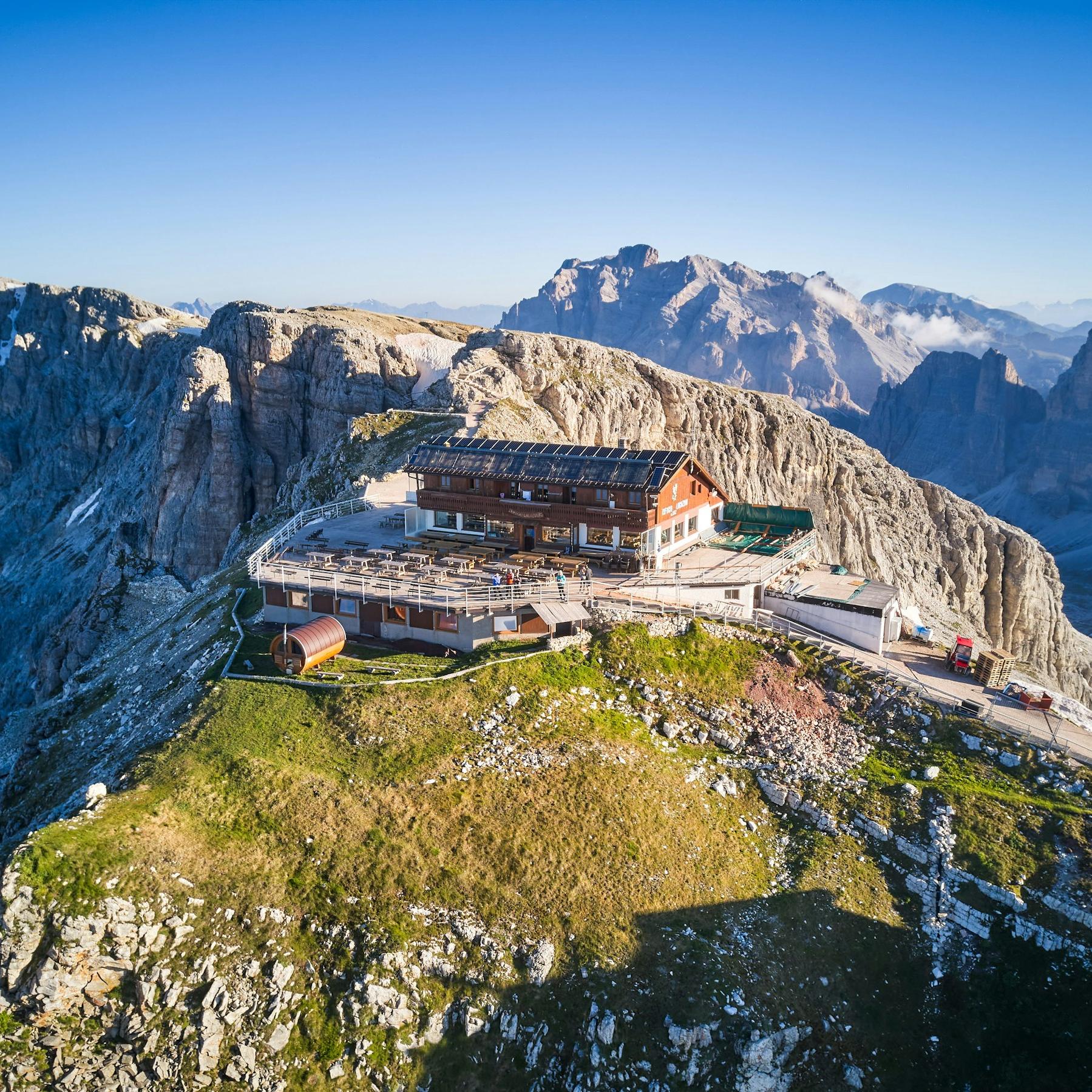
Over Passo di Limo and the Fanes pastures, then steeply up scree to Forcella del Lago (2,486 m) and down past the little Lago di Lagazuoi before the last climb. The hut, at 2,752 m, is the highest night of the walk, next to the top of the cable car from Passo Falzarego.
Sleep: Rifugio Nuvolau, or Averau, Scoiattoli or Cinque Torri below it
Down past Forcella Travenanzes to Passo Falzarego (buses to Cortina), then up to Rifugio Averau and along the ridge to the summit hut on the Nuvolau (2,575 m). A short day, with time for the wartime tunnels in the Lagazuoi or the Cinque Torri open-air museum.
Sleep: Rifugio Città di Fiume, Rifugio Passo Staulanza 1½ hours on, or Croda da Lago by a lower route
Back to Averau and down to Passo Giau, then under the walls of the Lastoi di Formin and across the Mondeval pastures, past a Mesolithic site, to Forcella Ambrizzola (2,277 m), with the Pelmo ahead.
Sleep: Rifugio Tissi, or Rifugio Coldai about 1½ hours earlier
Round the Pelmo to Passo Staulanza (bus to Longarone) and up to Rifugio Coldai, then past Lago Coldai into the Val Civetta, facing the great north-west face of the Civetta, the 'wall of walls'. Tissi stands on Col Rean, a short climb above the path.
Sleep: Rifugio Carestiato, or Rifugio Vazzoler halfway
Down under the towers of the Civetta, Torre Venezia and Torre Trieste, to Vazzoler in the woods, then a rocky traverse below the Moiazza over Forcella del Camp (1,933 m). Listolade, at the foot of the Val Corpassa, has buses to Agordo and Belluno.
Day 8 · Rifugio Carestiato → Rifugio Sommariva al Pramperet
Moderate day≈ 5 h13 km↑640 m↓620 m
Sleep: Rifugio Sommariva al Pramperet
Down to Passo Duran (two huts, no bus), a short way along the road, then a long traverse to Forcella Moschesin (1,940 m), with the ruins of an old fort, and into the Dolomiti Bellunesi National Park.
Day 9 · Rifugio Sommariva al Pramperet → Rifugio Pian de Fontana
Easy day≈ 4 h6 km↑550 m↓770 m
Sleep: Rifugio Pian de Fontana, with a 12-bed bivouac beside it
Short but rough: up to Forcella del Van de Città (about 2,400 m), the high point of the south and its wildest corner, a bowl of stone where snow can linger early in the season, then down steep grass to the hut. Take care when the grass is wet.
Over Forcella La Varetta (1,704 m), facing the Schiara, then the long descent of the Val Vescovà past Rifugio Bianchet (1,245 m) to the Agordo road at La Pissa, where Dolomiti Bus line 1 runs to Belluno. The official finish crosses the Schiara on via ferratas instead.
In all: 114 km over 10 days
Walking times are rough estimates without breaks, from each day’s distance, climb and descent (the Alpine clubs’ DIN 33466 formula).
Huts and guesthouses on the official booking site; the others take bookings on their own sites.
Other ways to do it
In 11 days: stop at Rifugio Vazzoler halfway through day 7, and you have the classic guidebook pace, with no day over about 15 km.
In 8 days: walk from Lago di Braies to Fanes in one day (19 km, about 1,570 m up; the Pederü jeep saves the last climb) and from Pramperet to La Pissa in another (18 km, about 2,300 m down).
Half the route: the northern half from Lago di Braies to the Lagazuoi in 3 days, then down to Passo Falzarego and the bus to Cortina; or the quieter southern half from Passo Staulanza (bus from Longarone) to La Pissa in 5 days.
Through the mountain: on day 4, go down to Passo Falzarego inside the Lagazuoi, through the restored First World War mine tunnel, over 1 km long and fitted with cables, in 2½–3 hours. Take a headlamp, a helmet and gloves.
Nuvolau to Passo Giau direct: on day 5, a short descent with a ladder and fixed cables saves the detour by Averau. A via ferrata kit is recommended.
Croda da Lago instead of Città di Fiume on day 5: by the Cinque Torri and Ponte de Rucurto to the hut on its lake, about 4 hours from Nuvolau, then rejoin the route at Forcella Ambrizzola next morning.
The official finish over the Schiara: from Pian de Fontana to the Bivacco del Màrmol and down the Màrmol (Piero Rossi) and Zacchi via ferratas, some 500 m of cables and ladders, to Rifugio 7° Alpini, then down the Val d'Ardo to Belluno. It takes two days and needs a via ferrata kit and experience, or a mountain guide; a path without ferratas, via Forcella Caneva, reaches 7° Alpini in about 8 hours.
Not realistically: Alta Via 1 is a hut walk. Camping is banned in the three protected areas it crosses. The Fanes-Senes-Braies Nature Park in South Tyrol, on the first days, allows only an alpine bivouac forced by unforeseen circumstances; the Ampezzo Dolomites Nature Park bans tents; and the Dolomiti Bellunesi National Park, on the last days, allows a bivouac only on a climb or in an emergency, with fines of up to about €1,000. In the middle, from Passo Giau to Passo Duran, no park rule applies, but we found no right to camp either.
The campsites are down in the valleys, off the route: around Dobbiaco and Villabassa at the start, around Cortina d'Ampezzo, and at Palafavera, about 4 km below Passo Staulanza on day 6. With a tent you'd need a bus to one on most nights. The unstaffed bivouacs and the huts' winter rooms are shelter for emergencies and the off-season, not free beds in summer.
Walk north to south, the way the hut chain and most guides run. Follow the blue triangle with a 1 in it, and the red and white CAI path numbers.
Start early. Thunderstorms build on many summer afternoons, and high ridges and passes are no place to be out in lightning: plan to be at the hut by early afternoon.
Carry plenty of cash in euros. Vazzoler takes cash only, other huts' card machines depend on a weak connection, and there are no cash machines at the huts.
Bring your own sheet sleeping bag: CAI rules require one in their huts, most other huts want one too, and those that sell or rent them charge for it. Blankets and pillows are provided.
A CAI or other alpine club card pays for itself: at least 20% off half board in the CAI huts, which are most of the huts from Nuvolau south. Show the card itself; private huts such as the Lagazuoi give no discount.
There's no luggage transfer: most huts have no road, so you carry everything. A taxi can take bags only to the road passes, and the Lagazuoi cable car and the Cinque Torri chairlift carry luggage for a fee (€10 in 2026).
Fill up at every hut and carry 1.5–2 litres: on the high limestone stretches there are few springs.
If you'll be late or change plans, phone the next hut: CAI huts hold a booked bed only until 18:00 on the day.
Sleep in the huts. Camping is banned in the three parks the route crosses, which allow only an emergency or climbers' bivouac.
The First World War front ran through here. On day 4 you can walk the Lagazuoi tunnels or the restored trenches of the Cinque Torri open-air museum, and the crater of the Castelletto mine, blown in 1916, is just off the route.
What to take
The basics
Hiking boots you have already walked in
Layers: a warm fleece or down jacket for the evenings
Waterproof jacket and trousers
First aid kit with blister plasters
Head torch
Water for the day: 1.5–2 litres
An offline map on your phone, and a power bank
ID and your insurance card
For this trail
A sheet sleeping bag (liner): required in the huts
Cash in euros, enough for several nights
Trekking poles: steep scree and long descents, 1,500 m on the last day
A headlamp and a helmet for the Lagazuoi tunnels; a via ferrata kit only for the ferrata variants
A waterproof jacket and warm layers: afternoon storms and cold mornings at 2,700 m
Sun hat, sunglasses and sun cream: most days are above the trees
Your CAI or alpine club card, and an ID card or passport for check-in
Cortina Express runs one bus a day from Mestre station (14:00) and Venice airport (14:20) through Cortina (about 16:30) to Dobbiaco (about 17:40), the town for Lago di Braies. More buses run from the airport to Cortina only, in about 2–2½ hours (Cortina Express and Dolomiti Bus line 72, ATVO in summer); from Cortina, bus 445 reaches Dobbiaco in about 50 minutes. Book seats ahead. From Treviso airport, take the bus to Mestre station, about 30 minutes, and go on from there. These times are valid until June 2027.
Trains from Munich and Innsbruck cross the Brenner to Fortezza (Franzensfeste), where the Val Pusteria line runs to Dobbiaco every 30 minutes in about 1¼ hours. Innsbruck to Dobbiaco takes about 3 hours with the changes. Works on the line go on until about mid-2027, with replacement buses on some days: check before you travel.
The 442 runs from Dobbiaco bus station, which is separate from the railway station, through Villabassa to the lake in about 30 minutes: in 2027 every half hour from 29 May to 10 October, otherwise hourly. From 1 July to 15 September book and pay online in advance (see Book early). From the train, the 439 runs to the lake from Monguelfo station. Sleep in Dobbiaco or Villabassa and take an early bus: the walk to Biella takes 3½–4½ hours.
Dolomiti Bus line 1, Agordo–Belluno, stops at La Pissa and reaches Belluno railway station in about 30 minutes. In summer 2026 there were 13 or more a day from Monday to Saturday but only five on Sundays and holidays; the last left La Pissa at 19:02.
Regional trains take about 2 hours from Belluno to Venezia Santa Lucia through Treviso and Mestre, some direct and others with a change at Conegliano. For Venice airport, change at Mestre to the airport bus; for Treviso airport, it's a short bus or taxi ride from Treviso station.
Summer buses reach the route at several road passes and one village: Passo Falzarego (line 52 to Cortina, about 35 minutes), Passo Giau (line 53 to Cortina), Passo Staulanza (line 25 to Longarone station) and the village of Listolade below Vazzoler (line 3 to Agordo, then line 1 to Belluno). Passo Duran has no bus. In 2026 the summer timetables ran until 9 September; the 2027 ones come out in spring.
From Passo Falzarego up to the Lagazuoi hut every 15 minutes: handy to join the route halfway, or to get down to the pass and a bus if the weather turns. In summer 2026 it ran until 18 October; a one-way ticket cost €21 (€24 in August), and a bag €10.
On day 2 you can skip the climb from Pederü to the Fanes plateau: in summer the Fanes hut runs a jeep for its overnight guests, and the Pederü hut runs a paid taxi on request. Ask when you book.
Alta Via 1 runs one way: you finish at La Pissa, 30 minutes by bus from Belluno, and Belluno is about 2 hours by train from Venice. To get back to Dobbiaco or a car left at the start, take the train or bus from Belluno to Calalzo (about an hour), the bus on to Cortina (about an hour) and bus 445 to Dobbiaco (50 minutes): most of a day. Or go via Venice and the daily Cortina Express.
Call 112, or in the Veneto, most of the route, 118, which goes straight to the medical and mountain rescue centre. The Soccorso Alpino (CNSAS) does the rescuing; in the Veneto you pay if you don't end up in hospital or the emergency room: €90 a minute of flight, up to €7,500.
Phone signal
Patchy. You'll usually find a signal at the road passes (Falzarego, Giau, Staulanza, Duran) and on the open high ground, but expect long gaps in the deep valleys and in the wild south, inside the Dolomiti Bellunesi park. Some huts have slow wifi. We found no official coverage map: download the route and your bookings before you set off, and phone ahead from where you have a signal.
Insurance
Make sure your travel insurance covers mountain hiking, helicopter rescue and the trip home. In the Veneto, where you spend most of the walk, a rescue that doesn't end in hospital or the emergency room is billed to you: €90 a minute of flight, up to €7,500, or up to €1,500 for a ground team. The European Health Insurance Card (EHIC) covers necessary state healthcare in Italy, though you may pay for emergency-room care if you aren't admitted; it doesn't cover rescue charges, private care or the trip home.
From 1915 to 1917 the front line between Italy and Austria-Hungary ran through these mountains, and the route walks straight through it. On the Lagazuoi both armies dug tunnels into the rock to blow up each other's positions; the Italian mine went off on 20 June 1917. Below, the Castelletto was blown up in July 1916, and trenches and gun posts still line the Cinque Torri. The Lagazuoi and the Cinque Torri are now open-air museums.
The idea of linking huts into long high routes took hold in the 1960s. In 1966 Mario Brovelli set out a programme of Dolomite high routes in the CAI paper Lo Scarpone, and in 1969 Piero Rossi proposed this crossing, from the Braies valley to Belluno, and published the first guide to it, numbered 1. Rossi also fought for the Dolomiti Bellunesi National Park, which the last days cross, and the via ferrata on the Schiara at the official finish bears his name. In 2009 UNESCO listed the Dolomites as a World Heritage Site.